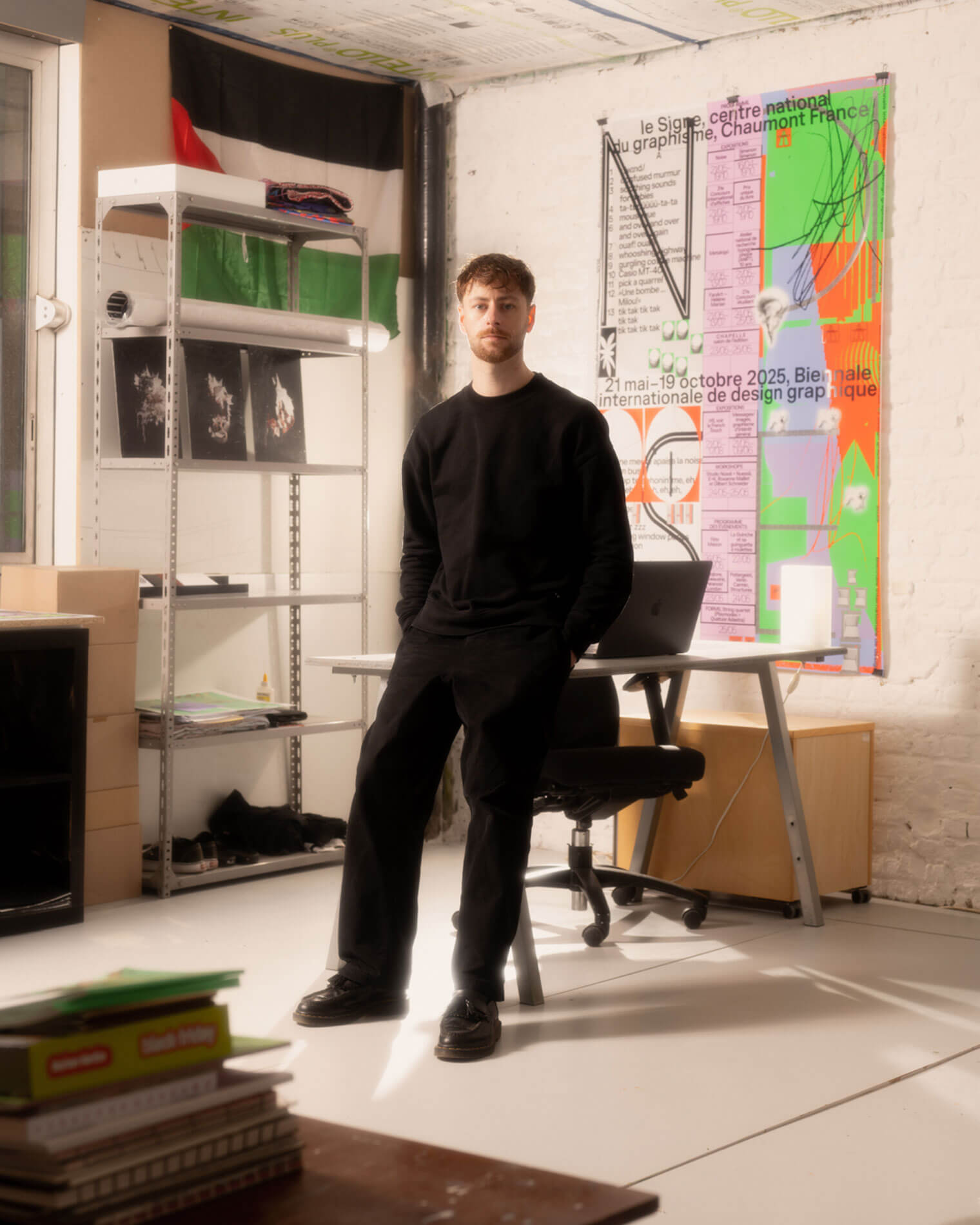
Théo Hennequin

Théo Hennequin is a Brussels-based graphic designer and visual artist with a conceptually driven practice spanning culture, music and sport. He collaborates with institutions, artists, festivals and collectives, from major museums to independent structures, to articulate distinctive positions across print, digital and motion.

His practice is rooted in the circulation of images and forms between swiss rigour, experimental layering and popular cultures, from the football stand to the mountain trail, using the distance between them as a space for inquiry.


Services

Visual identity: Creation of cohesive and distinctive visual identity systems — logos, brand guidelines, posters, and print and digital applications.
Editorial design: Content layout and reflection on the physical form — books, catalogues, magazines, zines.
Motion design: Bringing images and identities to life — motion design, teasers, animated posters, projected visuals.
Web design: Custom website design, tailored to the project’s identity — portfolios, festivals, galleries, collective platforms.
Typeface design: Bespoke lettering design — brand fonts, display typefaces, lettering.

Commission

Please contact me so that I can put my skills to work for you.

Collaboration

Currently available on a freelance basis for collaborations.

Contact

hello@theohennequin.com
@theohennequin
Rue Jacques de Lalaing 13, 1040 Brussels

Selected clients

Affenpinshers, Africa Museum, Argos, Entwined, Harlem Lamine, Johan Poezevara, La Bellone, Les Chantiers Battus, Les Îles Mardi, Musique Action Chaumont, Palais de Tokyo, Traumnovelle, Toestand...
About

The Congo Panorama 1913 - Colonial Illusion Exposed

November 2025, Tervuren

Client: Africa Museum
Collaborator: Laurent Mbaah (graphic design)
Font: Acumin (Robert Slimbach)

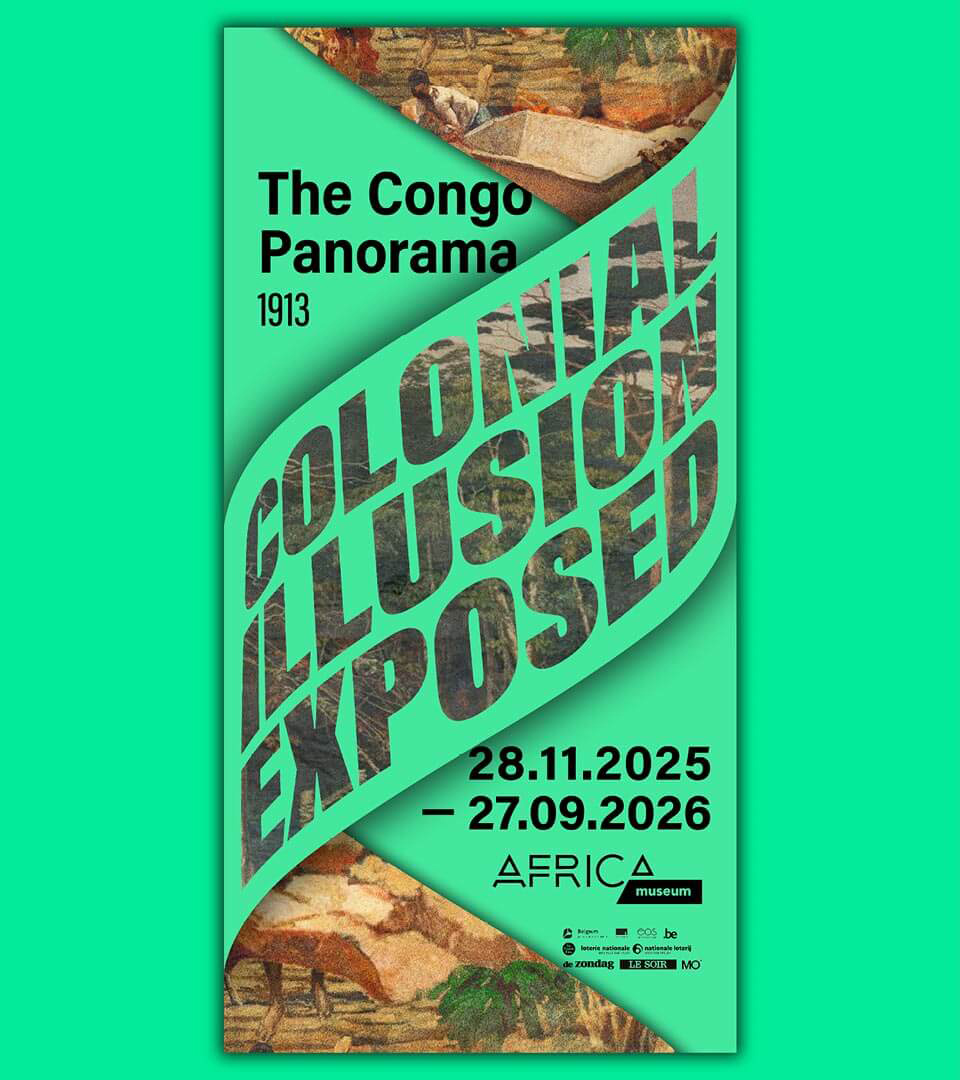
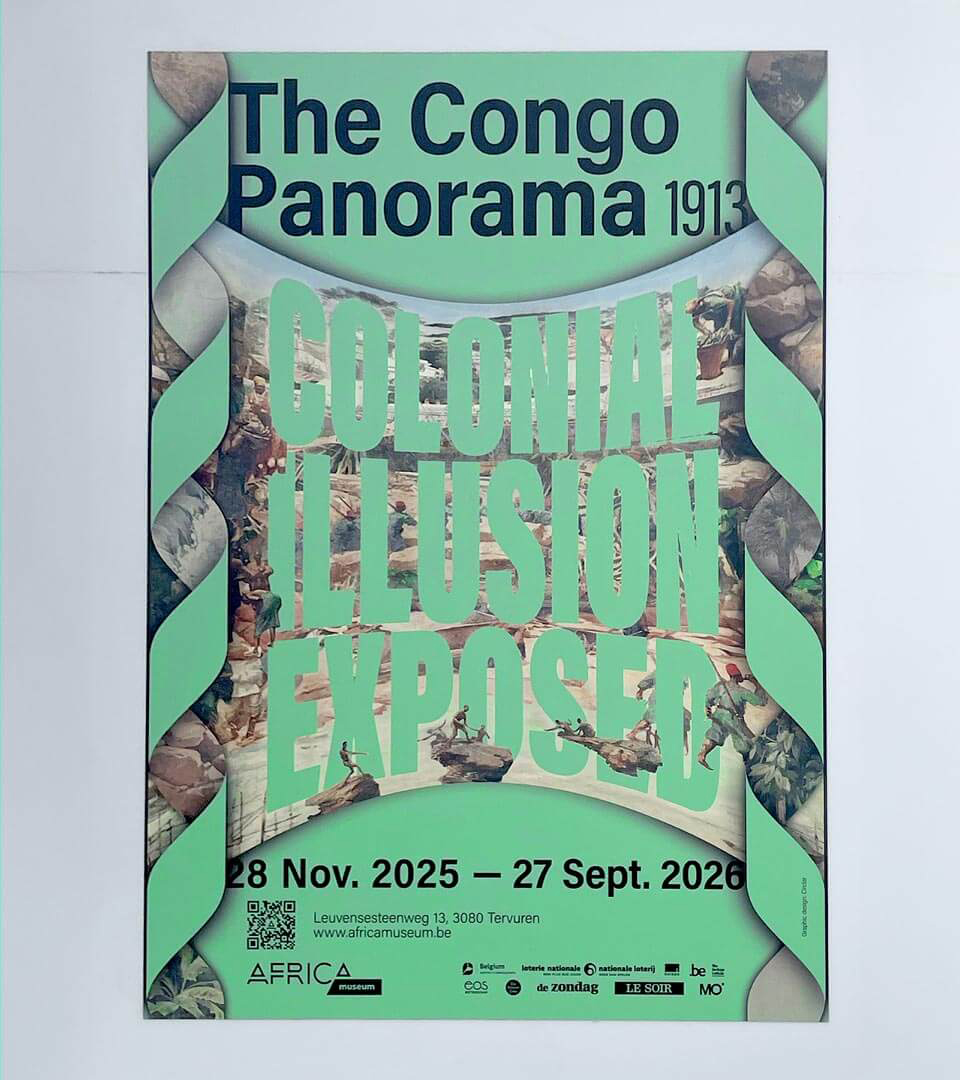
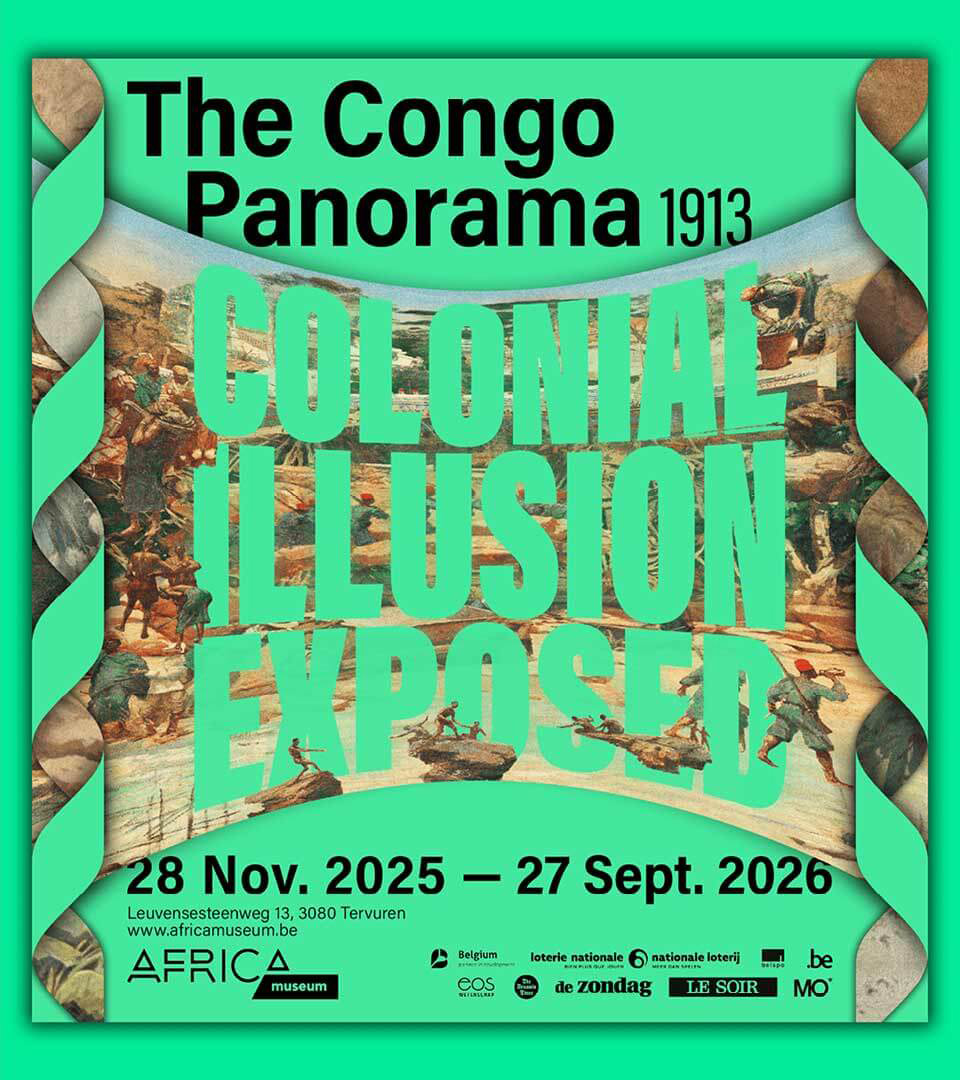
The Congo Panorama 1913 – Colonial Illusion Exposed is an exhibition at the Africa Museum in Tervuren that examines colonial propaganda through the lens of a monumental painting. Exhibited in 1913 at the Ghent World’s Fair, it glorified Belgian achievements in the Congo.

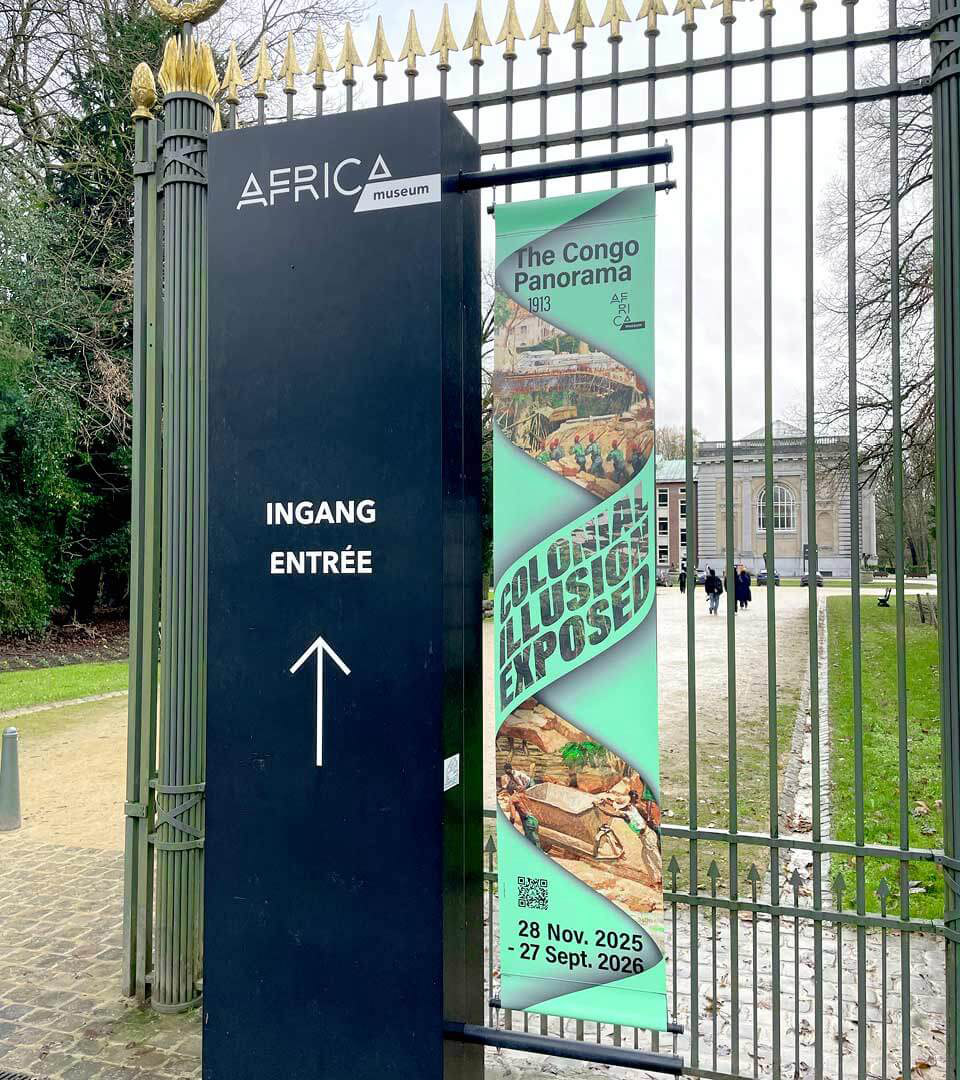
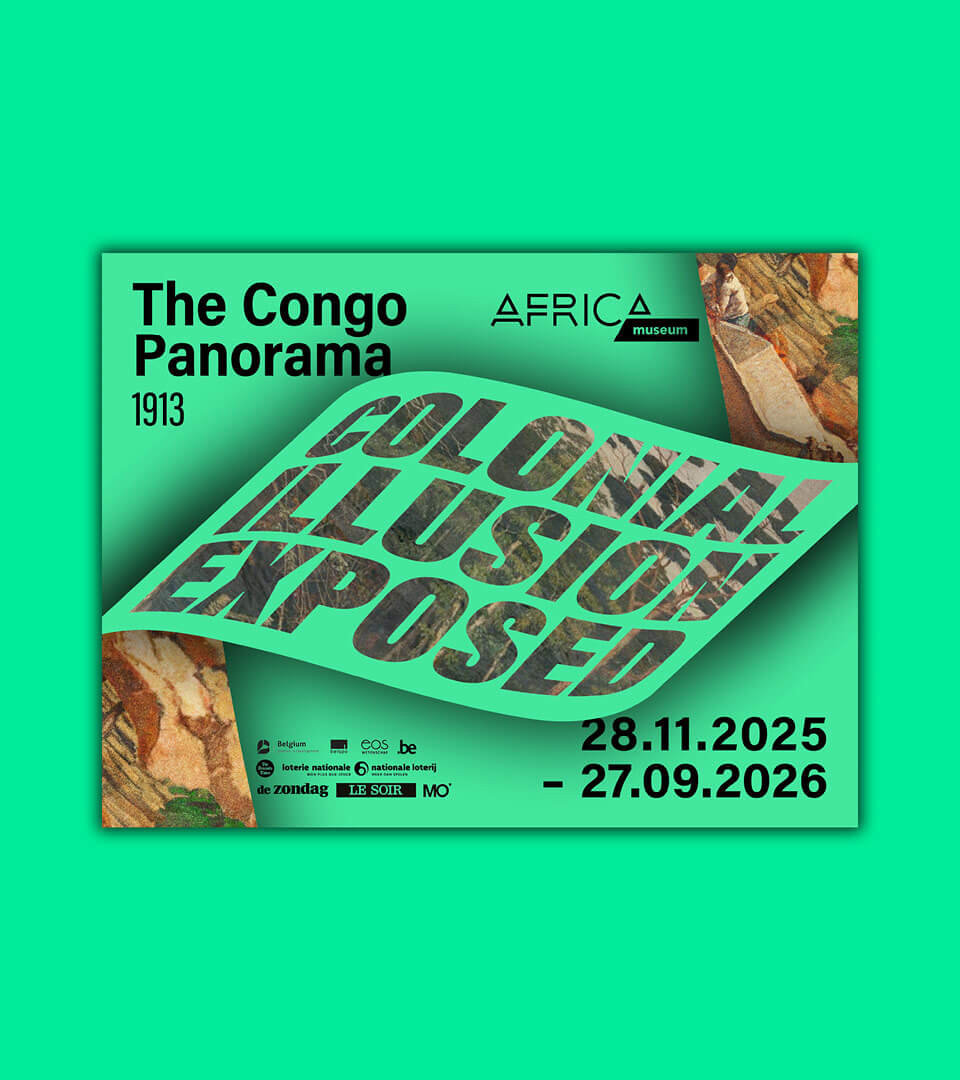
The visual identity draws on the panorama format: it unravels and unfurls, like a gaze that sweeps across the image without ever grasping its boundaries. This movement highlights the sheer scale of the format, the megalomania of the discourse and the violence of the acts, whilst maintaining a critical distance. This visual identity is applied across a range of media: posters, exhibition catalogues, videos, digital visuals, banners, labels and exhibition texts.

Vertical poster for the exhibition *The Congo Panorama 1913*: against a mint-green background, a wavy ribbon running diagonally frames the words ‘Colonial Illusion Exposed’ within a detail of the panoramic painting; dates 28 November 2025 – 27 September 2026 and the Africa Museum logo in the bottom right-hand corner
Poster for the exhibition *The Congo Panorama 1913*: the words ‘Colonial Illusion Exposed’ in large green capital letters are superimposed on the panoramic painting, framed on either side by twisted green ribbons; dates, address, QR code and partners’ logos at the bottom
A vertical banner hung on the railings of the Africa Museum, next to a black ‘Ingang – Entrée’ entrance sign: a twisted green ribbon reveals scenes from the painting, the exhibition title and its dates
Square version of the exhibition poster: the title ‘The Congo Panorama 1913’ at the top, ‘Colonial Illusion Exposed’ in large green letters on the painting, twisted ribbons down the sides, and the dates, address and partners’ logos at the bottom
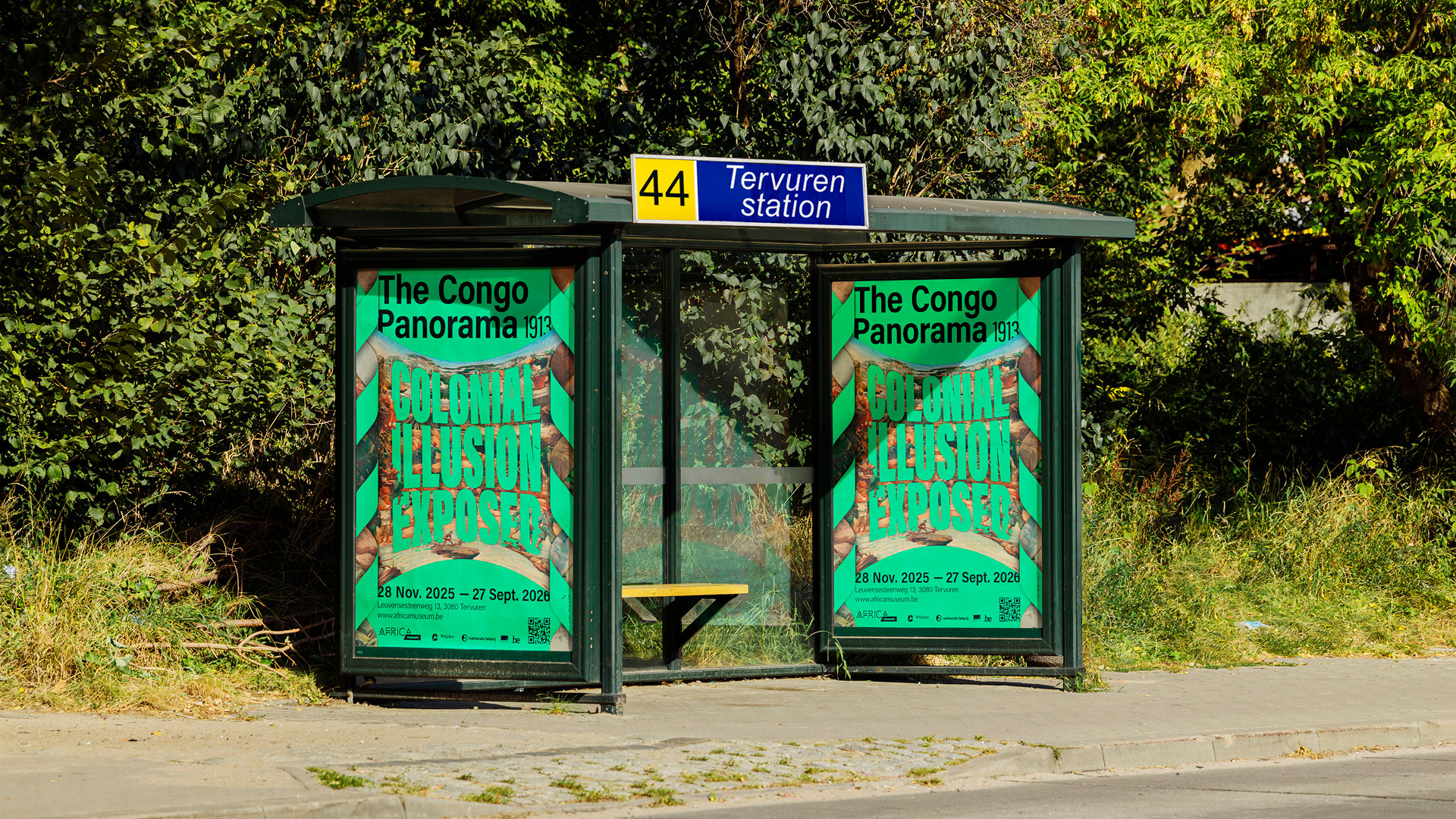
Bus shelter on route 44, at the Tervuren station stop, surrounded by greenery: its two advertising panels display the green poster for the exhibition *The Congo Panorama 1913*
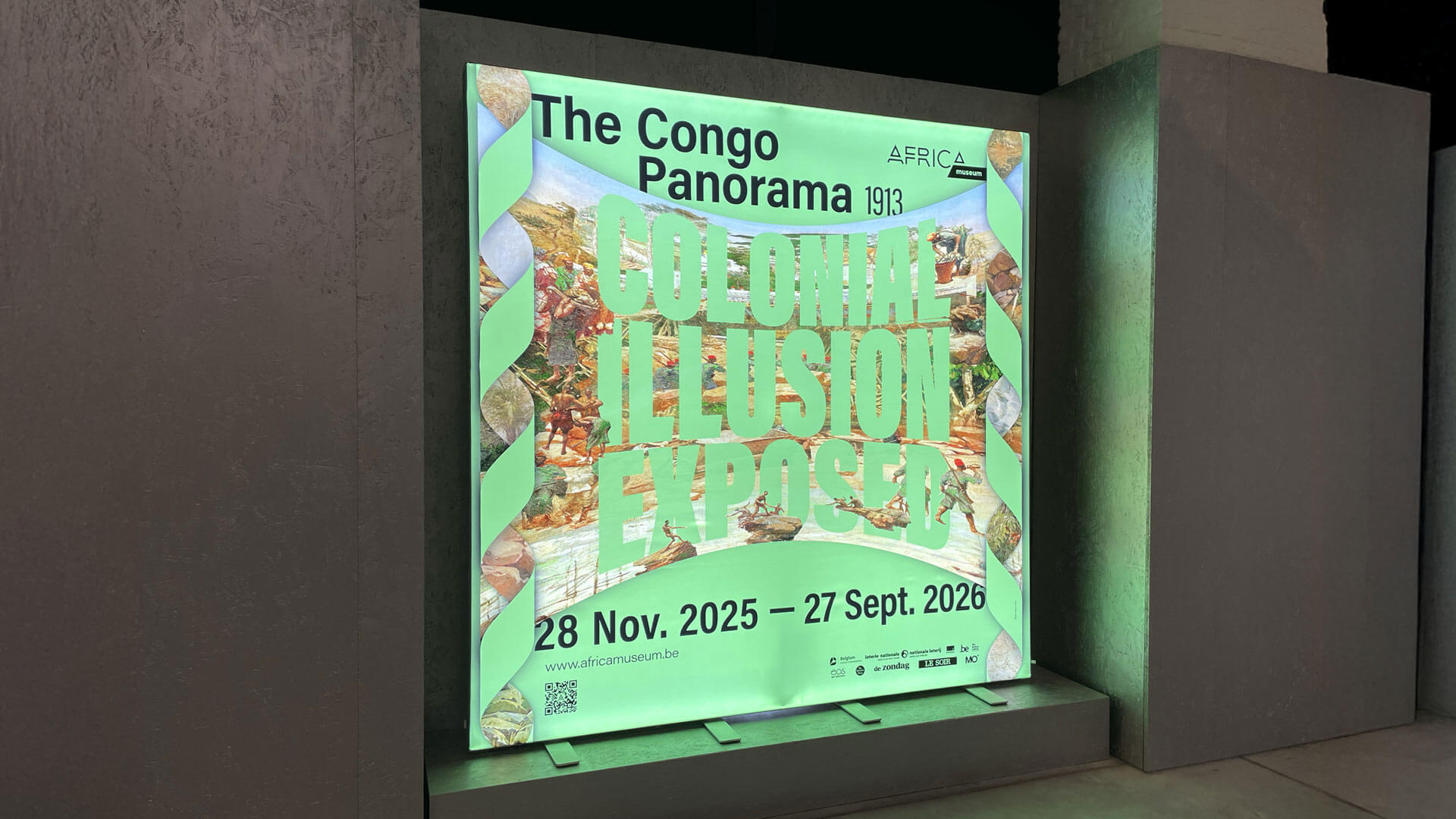
A poster for the exhibition, displayed in a backlit lightbox set into a grey wall in a dark room; the green light from the poster is cast onto the plinth and the surrounding walls
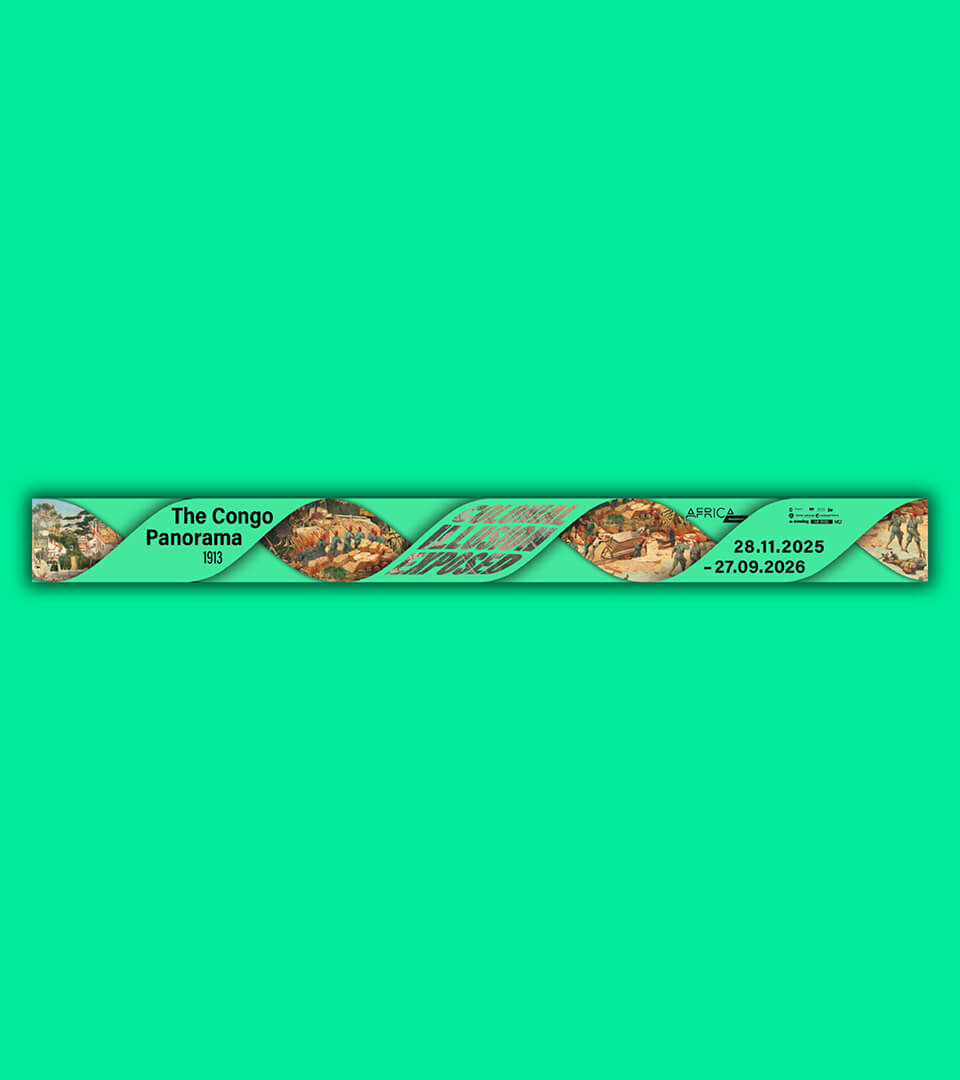
A very elongated web banner: a green ribbon twisting like a propeller reveals, in turn, scenes from the painting, the title *The Congo Panorama 1913*, the words ‘Colonial Illusion Exposed’, the Africa Museum logo and the dates
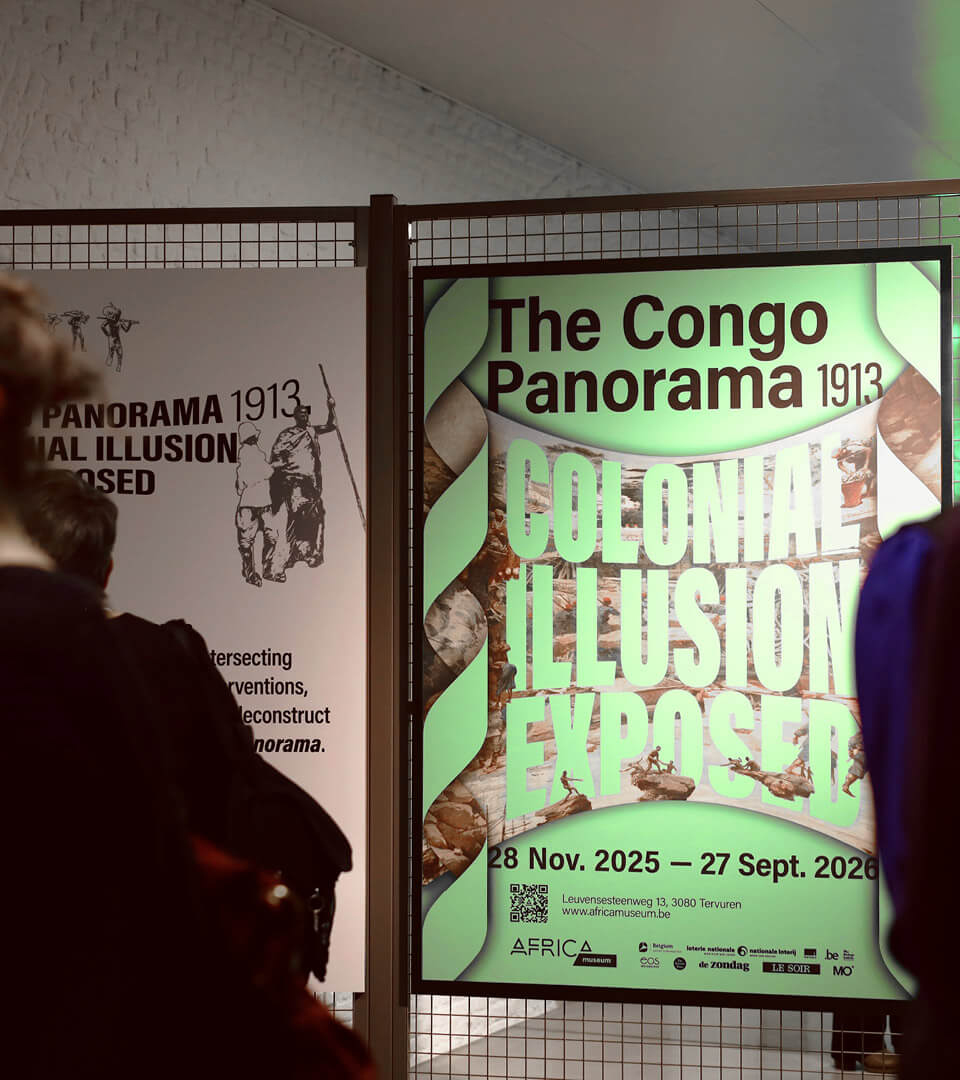
An exhibition poster attached to a metal grid in a room, in front of visitors seen from behind; on the left, a white panel with a black title accompanied by a drawing of figures
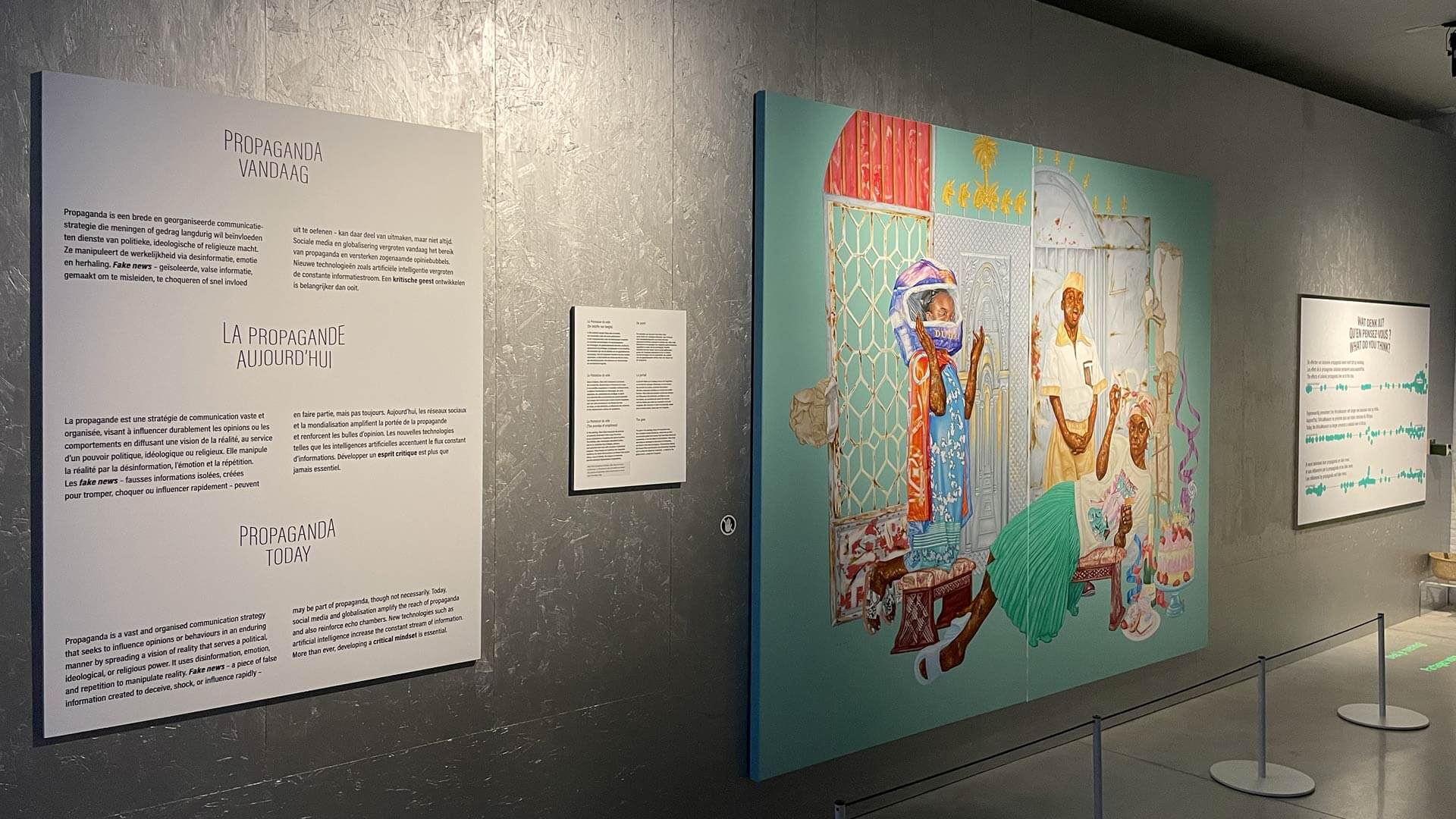
Exhibition hall: on the left, a large trilingual panel entitled ‘Propaganda today’; on the right, a contemporary painting on a turquoise background depicting three figures in a colourful interior, next to a panel posing questions to visitors
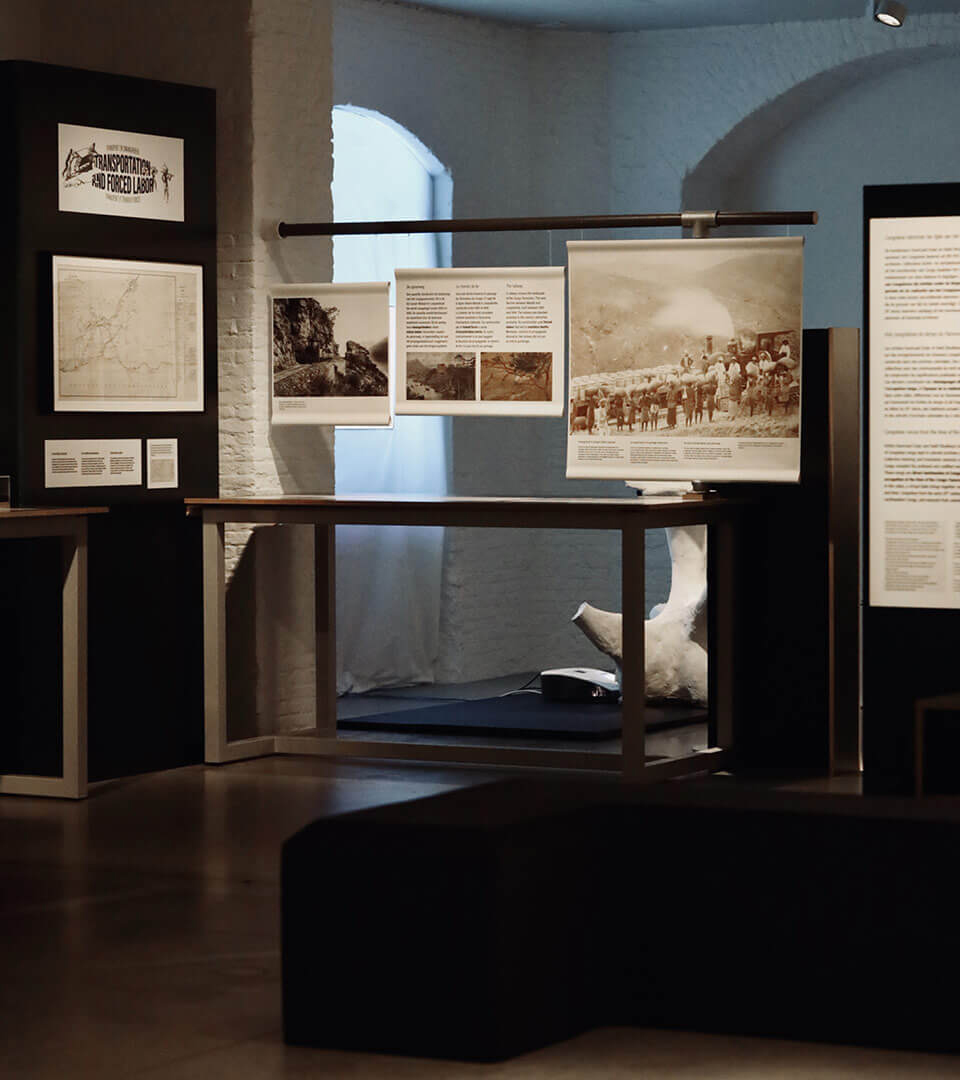
The ‘Transportation and forced labour’ section in a dimly lit room: a framed map, labels and canvases displaying sepia-toned photographs hanging above a table, beneath which lies a white object and a projector
Horizontal exhibition poster: against a green background, a wavy ribbon frames the words ‘Colonial Illusion Exposed’ within the panoramic painting; title in the top left-hand corner, dates in the bottom right-hand corner, partner logos
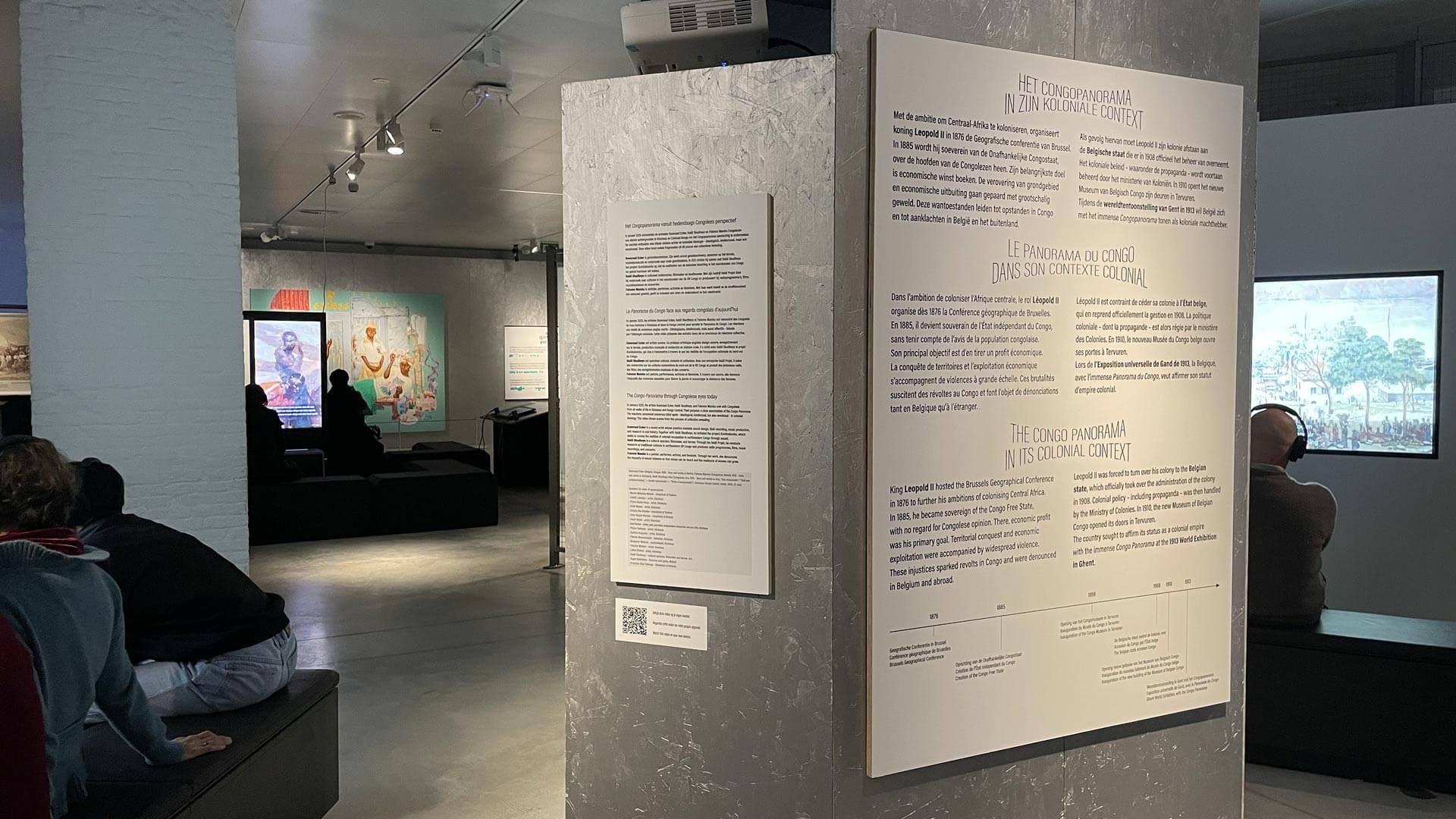
Exhibition panels entitled ‘The Congopanorama in its colonial context’, written in Dutch, French and English, featuring a timeline from 1876 to 1913; in the background, visitors seated in front of screens
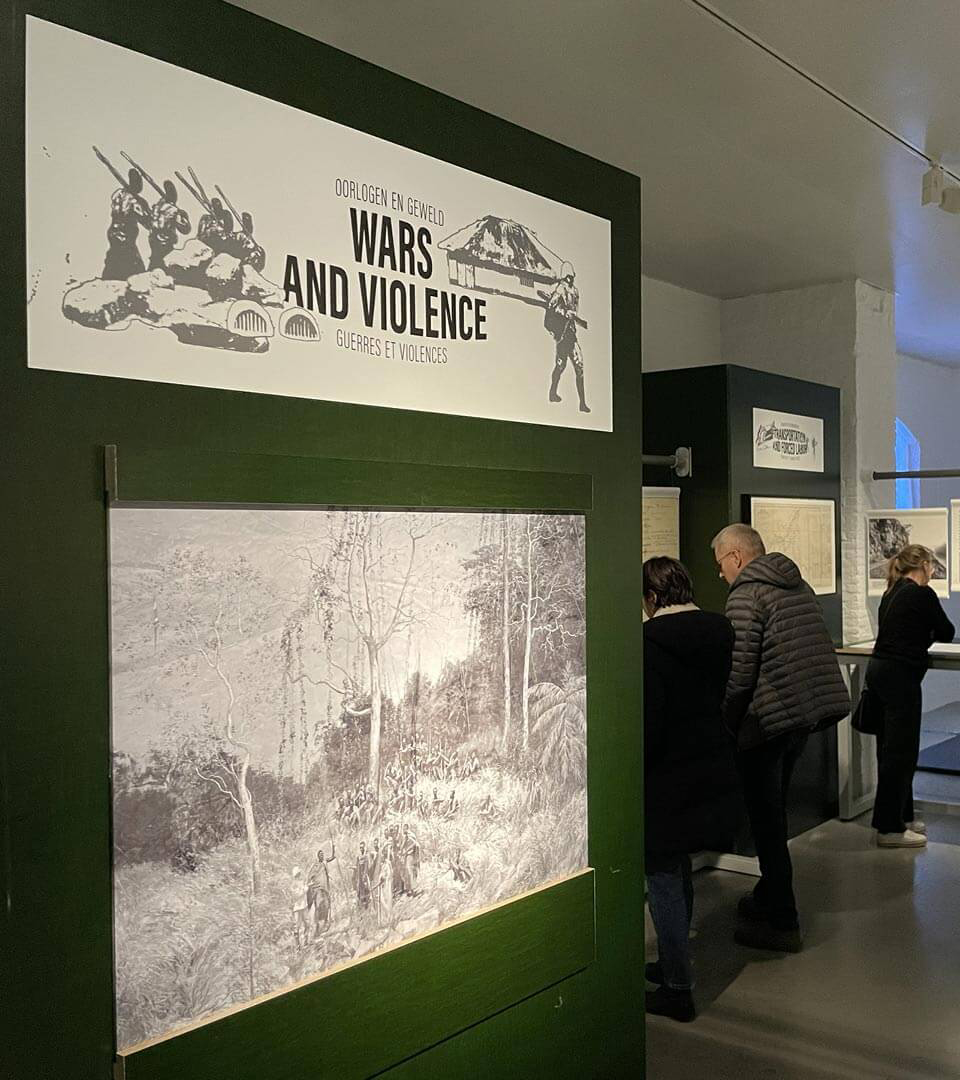
Entrance to the ‘Wars and Violence’ section (‘Oorlogen en geweld’, ‘Wars and Violence’): a panel featuring illustrated characters hangs above a black-and-white engraving of men gathered in a forest; visitors are looking at documents in the background
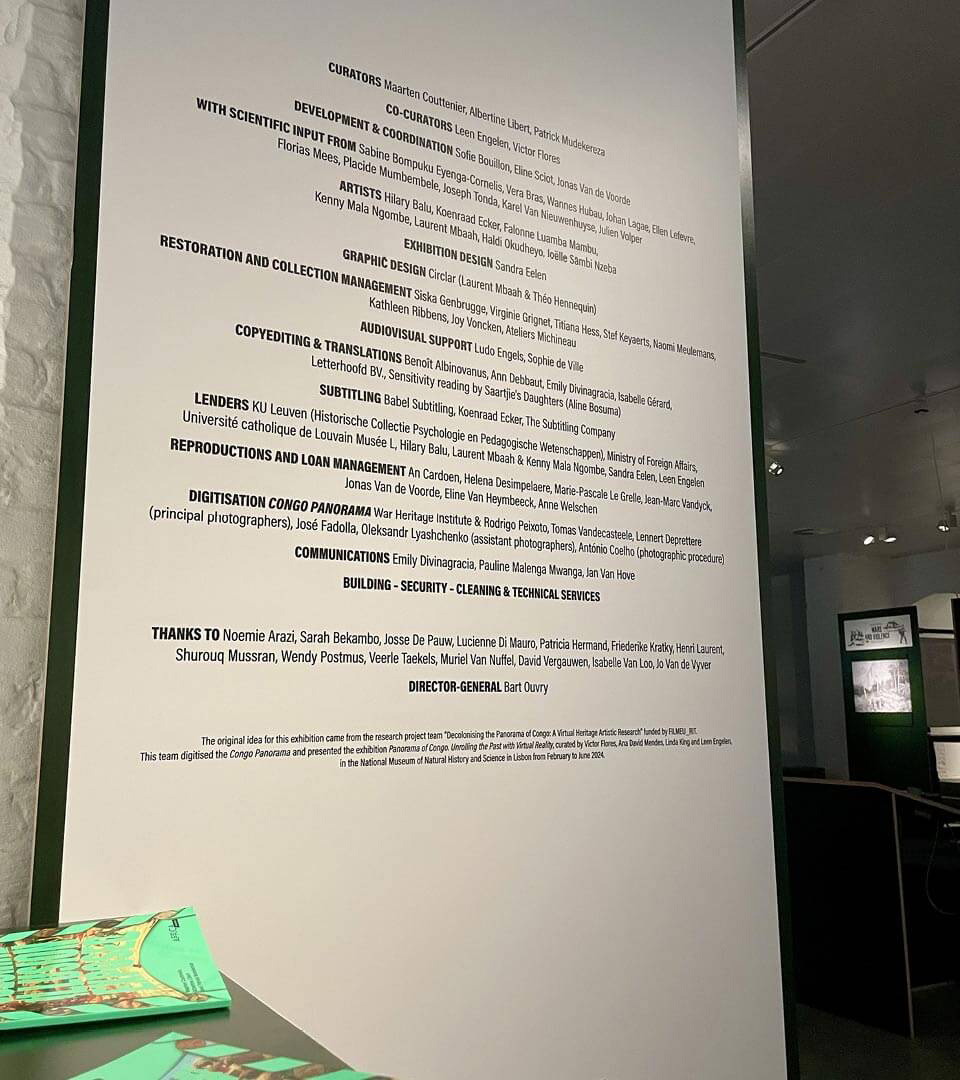
The exhibition’s credits wall, listing curators, the team, lenders and acknowledgements, featuring graphic design by Circlar (Laurent Mbaah & Théo Hennequin); green catalogues are laid out on a table at the bottom left
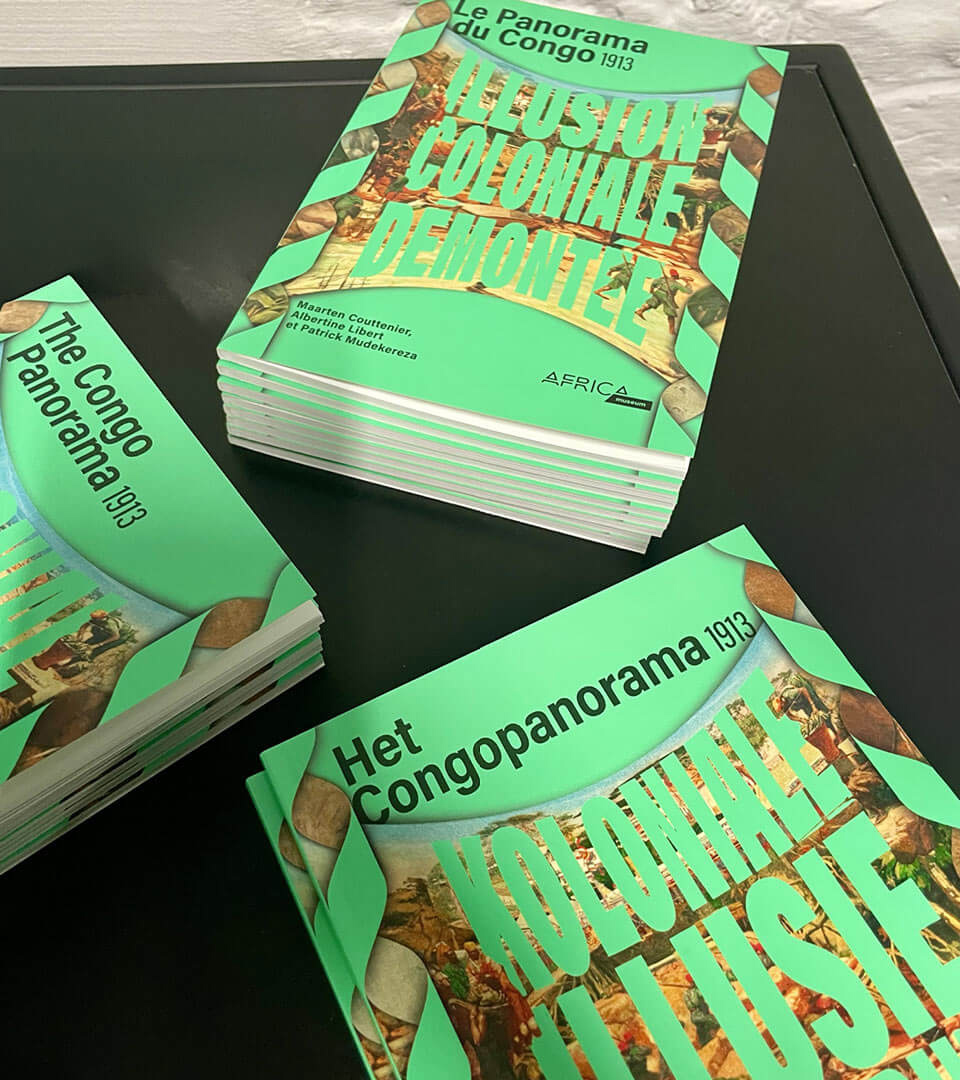
Stacks of exhibition catalogues in French, Dutch and English: their green covers feature the twisted ribbons and the title superimposed on the panoramic painting
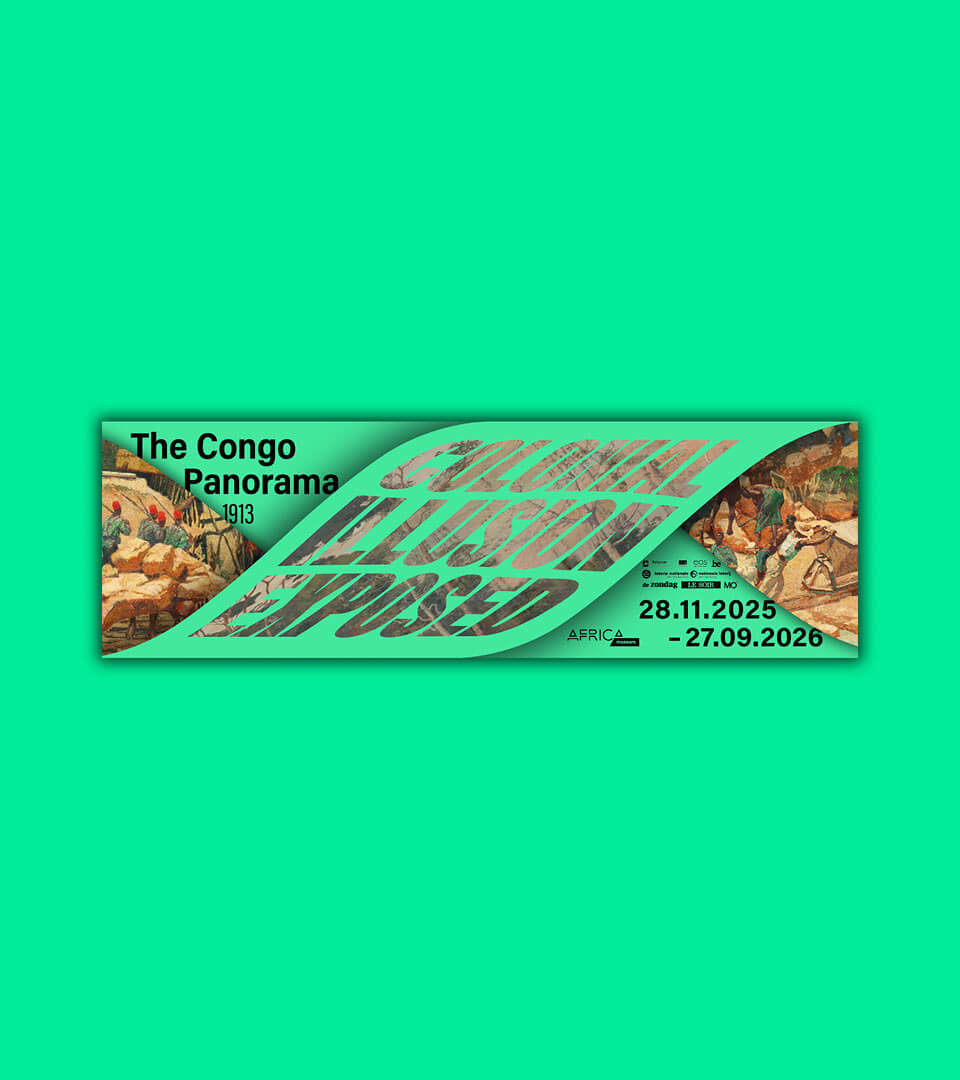
Horizontal exhibition banner: a wavy green ribbon runs across the painting, forming the words ‘Colonial Illusion Exposed’; the title is on the left, with logos and the dates 28 November 2025 – 27 September 2026 on the right

Mura Masa Antwerp