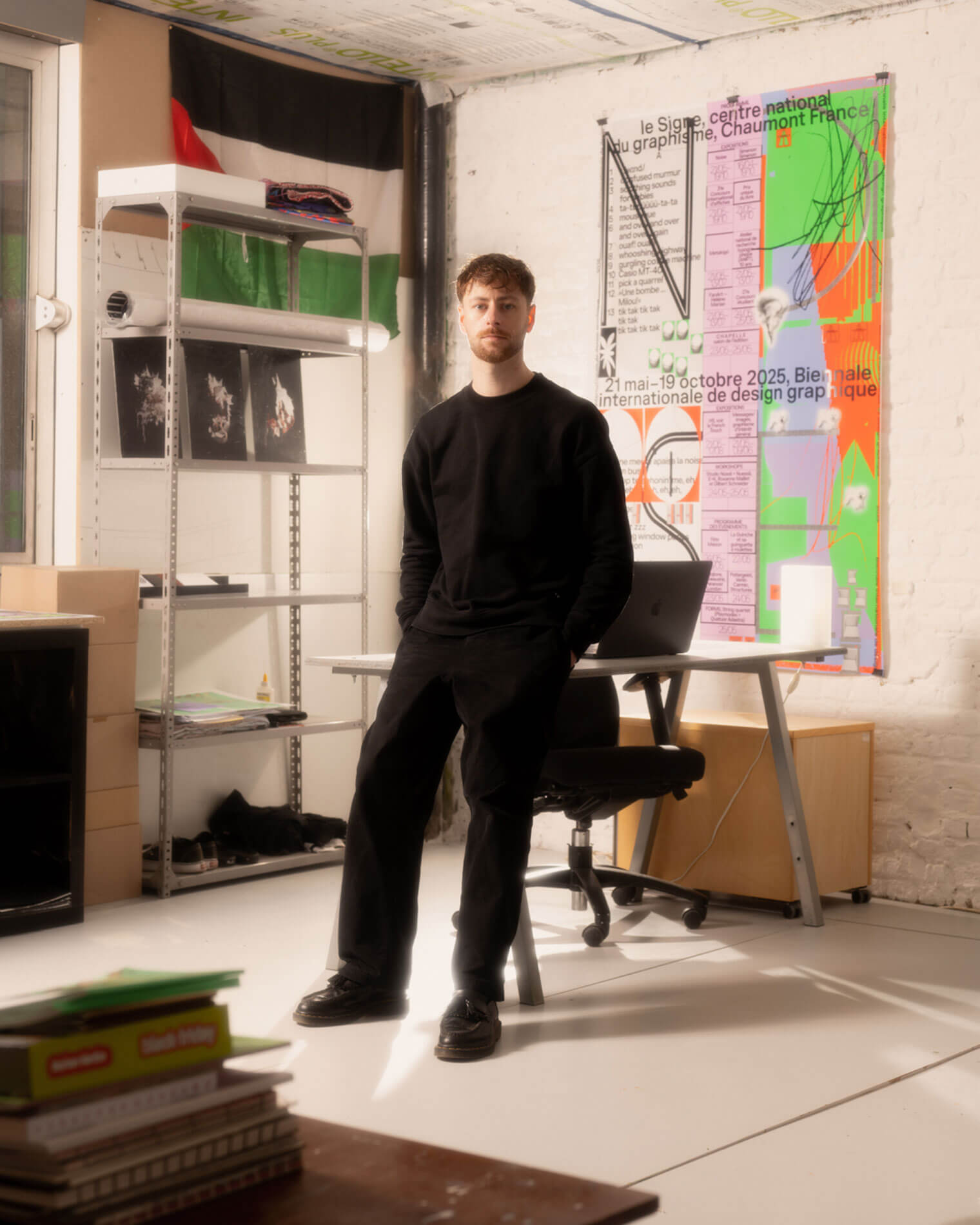
Théo Hennequin

Théo Hennequin is a Brussels-based graphic designer and visual artist with a conceptually driven practice spanning culture, music and sport. He collaborates with institutions, artists, festivals and collectives, from major museums to independent structures, to articulate distinctive positions across print, digital and motion.

His practice is rooted in the circulation of images and forms between swiss rigour, experimental layering and popular cultures, from the football stand to the mountain trail, using the distance between them as a space for inquiry.


Services

Visual identity: Creation of cohesive and distinctive visual identity systems — logos, brand guidelines, posters, and print and digital applications.
Editorial design: Content layout and reflection on the physical form — books, catalogues, magazines, zines.
Motion design: Bringing images and identities to life — motion design, teasers, animated posters, projected visuals.
Web design: Custom website design, tailored to the project’s identity — portfolios, festivals, galleries, collective platforms.
Typeface design: Bespoke lettering design — brand fonts, display typefaces, lettering.

Commission

Please contact me so that I can put my skills to work for you.

Collaboration

Currently available on a freelance basis for collaborations.

Contact

hello@theohennequin.com
@theohennequin
Rue Jacques de Lalaing 13, 1040 Brussels

Selected clients

Affenpinshers, Africa Museum, Argos, Entwined, Harlem Lamine, Johan Poezevara, La Bellone, Les Chantiers Battus, Les Îles Mardi, Musique Action Chaumont, Palais de Tokyo, Traumnovelle, Toestand...
About

Exposition Internationale Invisible

2021, Cambrai

Font: Woodland (Pangram Pangram - Mat Desjardins)

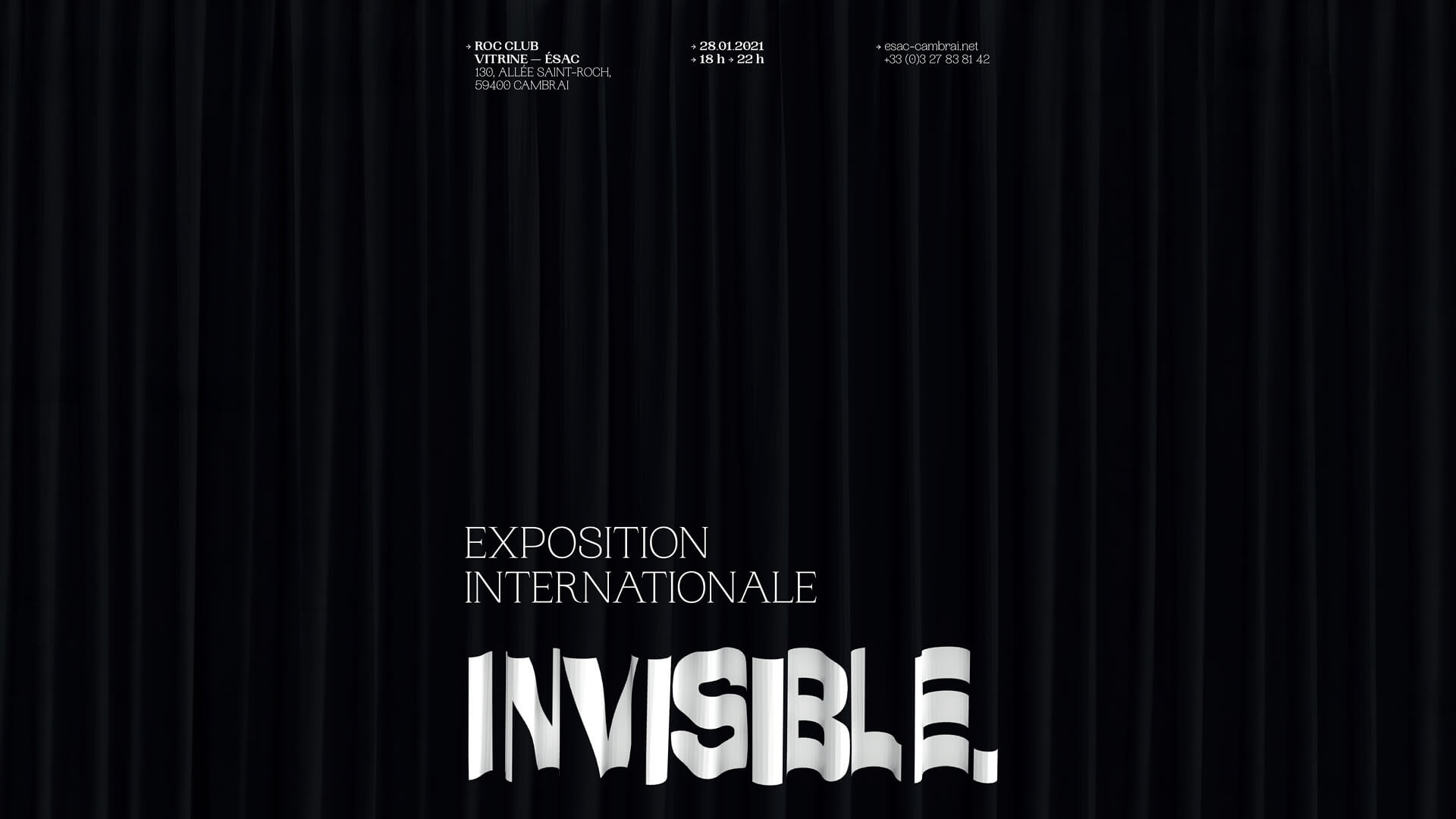
Poster for the ‘Invisible’ International Exhibition against a backdrop of a black pleated curtain. In the centre, the title ‘International Exhibition’ appears in large, slender serif letters, above the word ‘Invisible’, which is composed of thick white letters distorted to resemble undulating fabric. At the top of the poster are the practical details of the exhibition: venue, date, opening hours and contact details.

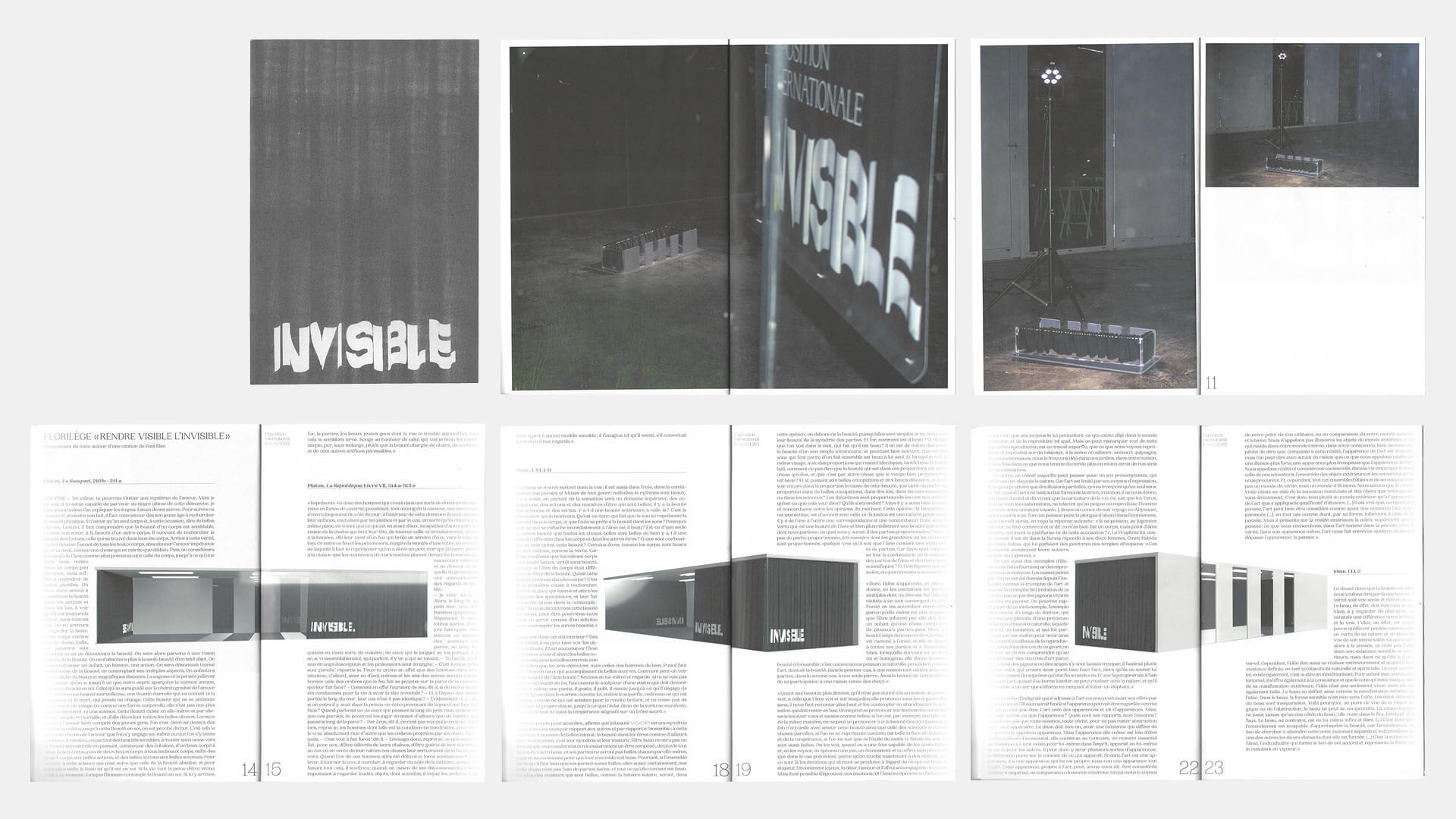
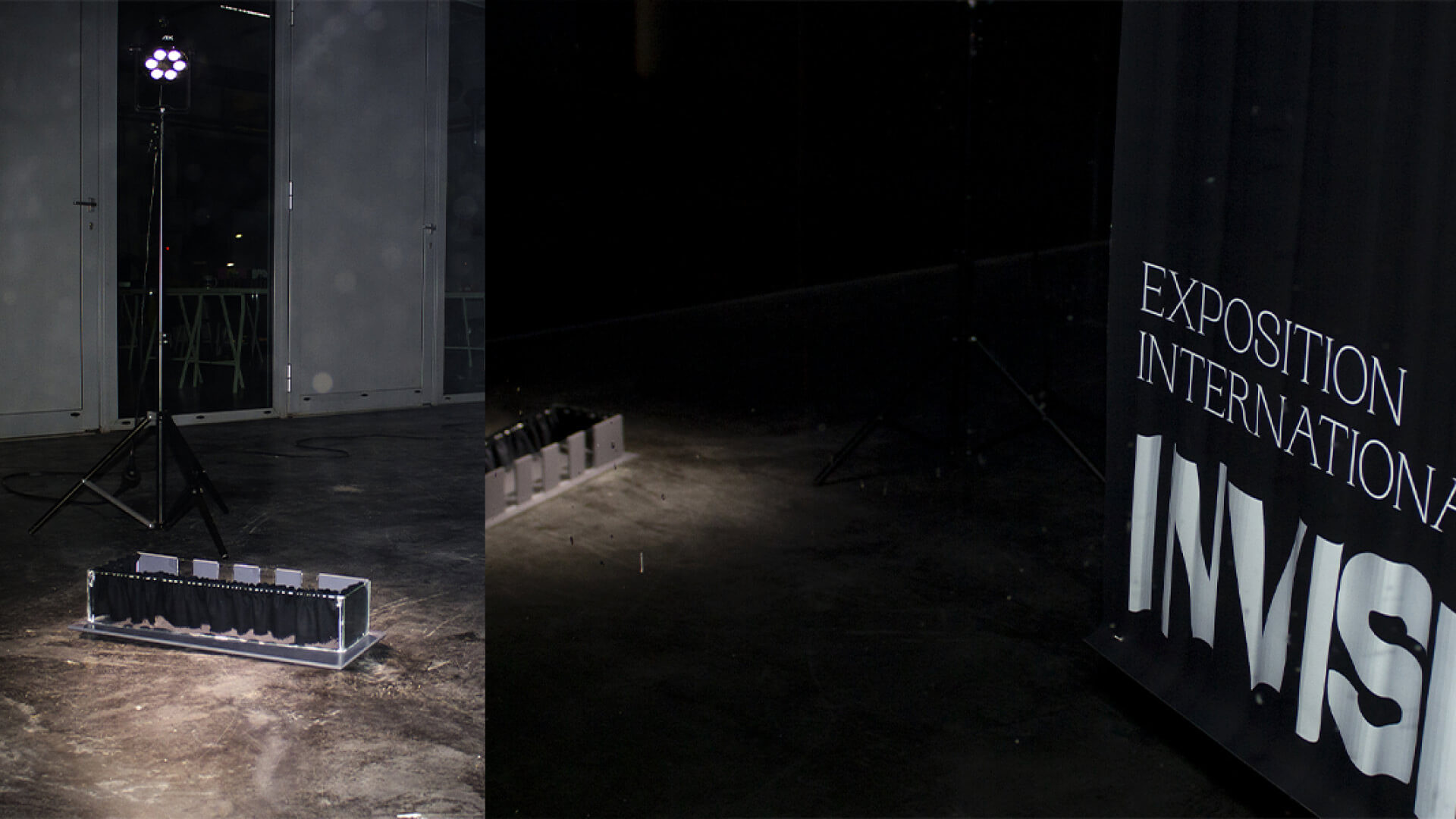
The Exposition Internationale Invisible questions the visibility and invisibility of art through a main piece: a scale model of the empty gallery, a mise en abyme.

The visual identity of the exhibition takes up the curtain motif, a symbol of what slips from view. It is accompanied by a catalogue that extends the exhibition’s argument through texts and essays on the void, particularly in art.

An overview of several elements of the visual identity and catalogue for the Invisible International Exhibition. At the top, a dark cover bearing the title ‘Invisible’, a double-page spread of photographs showing the installation in a gallery, and two views of the model on display. Below, several double-page spreads from the catalogue combine dense text with photographs of the model of the empty gallery, shown from various angles.
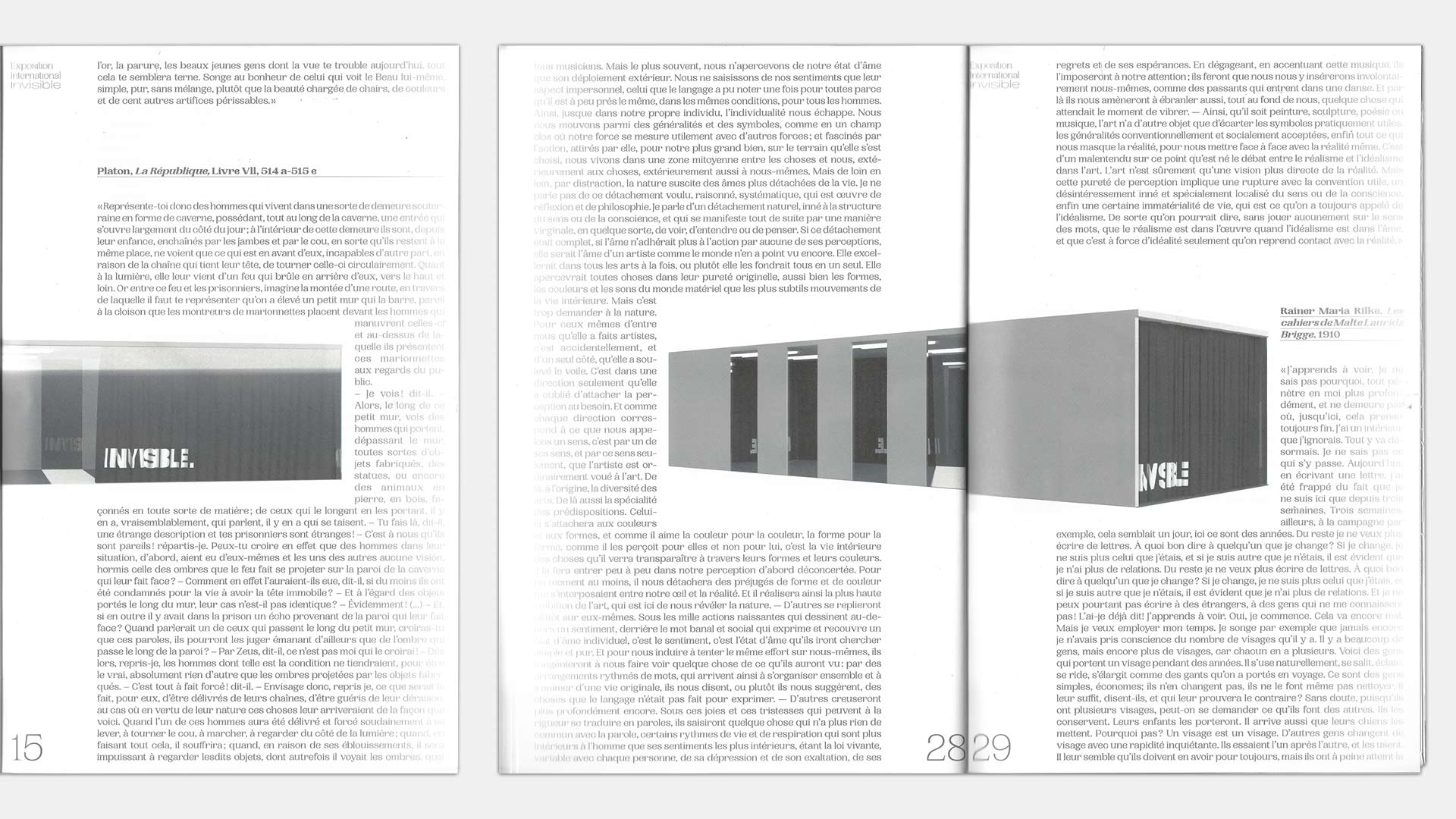
Excerpts from the catalogue of the Invisible International Exhibition showing pages 15, 28 and 29. The double-page spreads feature long texts set out in columns, interspersed with photographs of the model of an empty gallery: a dark volume bearing the word ‘Invisible’, a succession of rooms and partitions, followed by a perspective view of the model. The layout alternates between greyscale images, text and wide white margins.
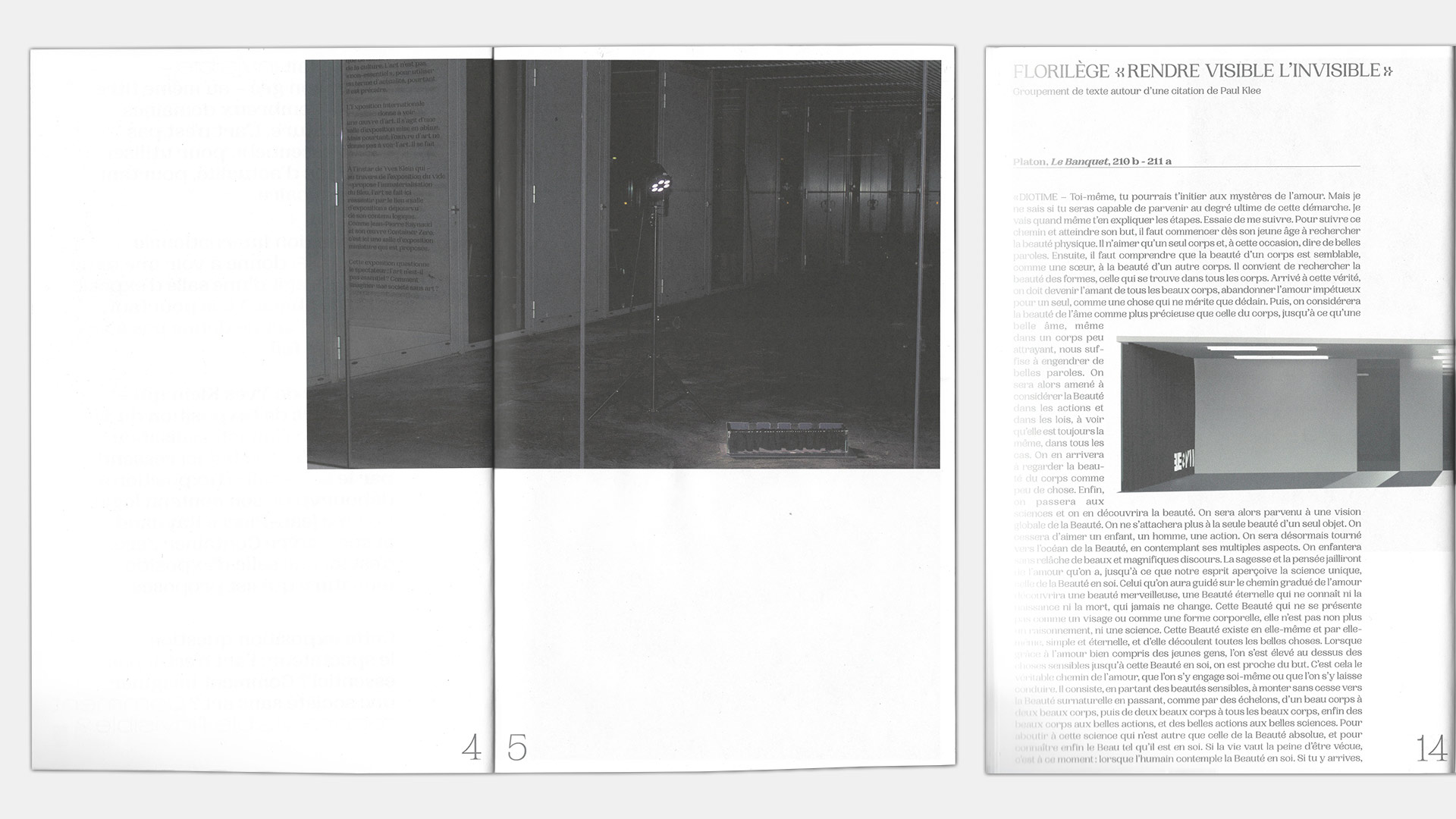
Here are two extracts from the catalogue of the Invisible International Exhibition. On the left, pages 4 and 5 form an almost blank double-page spread, featuring a panoramic photograph of the gallery and its scale model, viewed through a glass wall. On the right, page 14 features a long text entitled ‘Florilège – Making the Invisible Visible’, accompanied by a photograph of the empty gallery model. The layout combines delicate typography, large areas of white space and greyscale images.
A photograph of the installation for the ‘Invisible International Exhibition’ in a dark gallery. On the left, a floor-standing spotlight illuminates a small rectangular model of a gallery, made up of black and white panels. On the right, a large black poster bearing the words ‘Invisible International Exhibition’ in distorted white lettering occupies the foreground.

Fantasme & appropriation